
Ultra rare mineral, critical supply
Quartz (SiO₂) is made of two of Earth’s most common elements, silicon (Si) and oxygen (O), yet in its purest form, high purity quartz (HPQ) is among the rarest minerals with exceptionally few known deposits globally. HPQ has evolved from a niche mineral to being absolutely foundational to modern technology.
Without it, the manufacturing of equipment used to produce semiconductors, solar photovoltaic cells, optical fibre, quartz lighting and other high-tech applications is significantly compromised.

Quality Matters
Specialty high-tech industries rely on quartz due to its remarkable physical and chemical properties.
The geological and chemical structure of the raw ore is the single most important factor in determining quartz quality. While purification technology can play a role, processing alone cannot deliver the ultra-high purities required for advanced applications.
For refining to be cost-efficient, the quartz must already be exceptionally high grade with very low impurities. Despite the global abundance of quartz, only a handful of deposits worldwide meet the demanding standards required for these applications.
Concentrated Supply, Elevated Risk
The majority of all HPQ comes from a single deposit in Spruce Pine, North Carolina. Two operators control production there, supplying about three-quarters of the global market. And virtually all of the material that goes into semiconductor applications.
This extreme concentration has left the backbone of modern technology exposed to a single point of failure. Past disruptions, from a plant fire in 2008 to Hurricane Helene in 2024, which shut down operations and disrupted chipmaking worldwide. This further underscores the fragility of the supply chain.
Without alternative sources, a trillion-dollar technology ecosystem remains almost entirely reliant on a single quarry.
First Quartz is the solution.
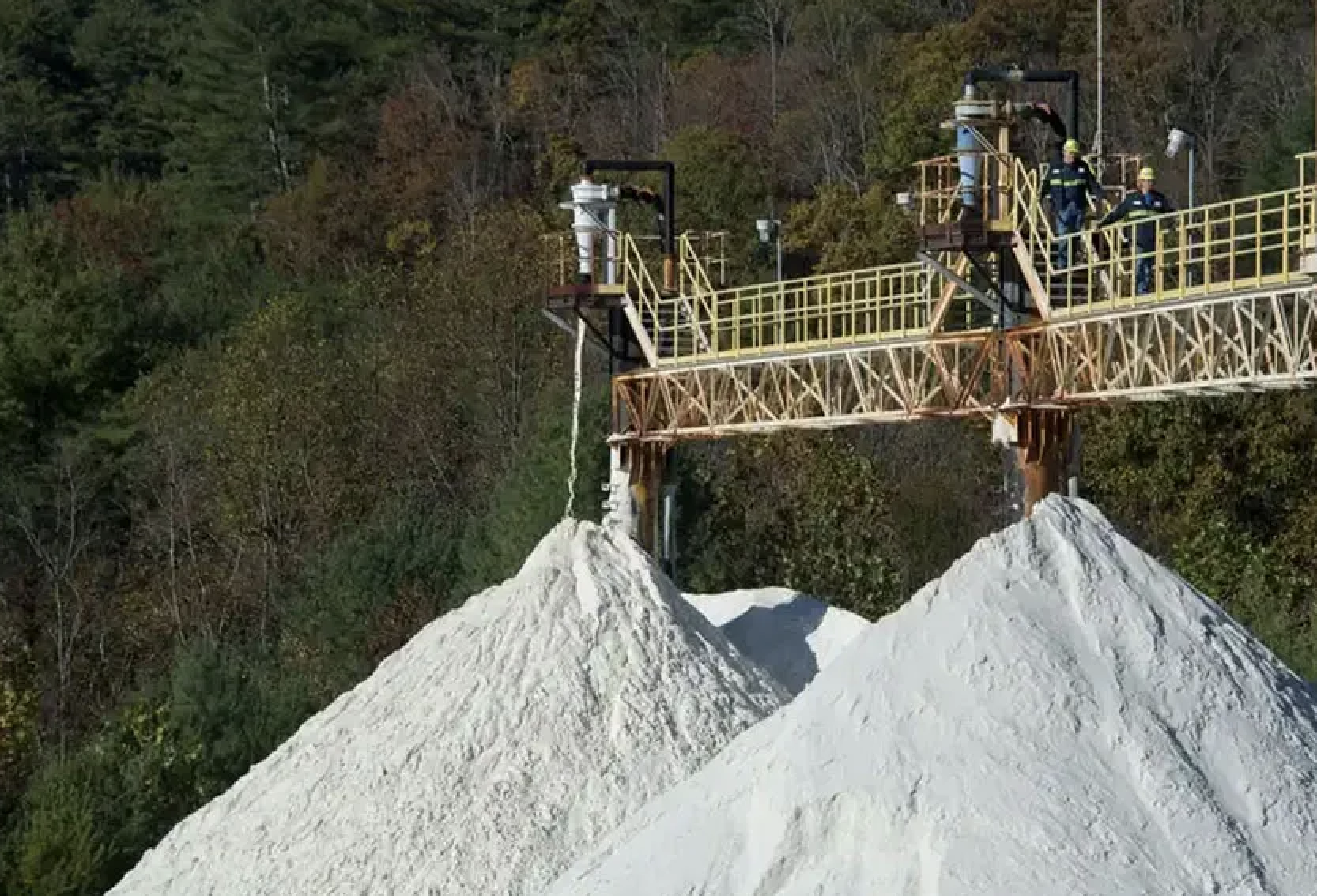
Spruce Pine Quarry Owned by Sibelco

Accelerating
Demand Drivers

Next-generation chips require ever-stricter purity standards, increasing reliance on HPQ. Global wafer fab expansion — fueled by AI adoption, EV growth, and policy incentives — is driving sustained demand for premium quartz.
Semiconductors
Aggressive decarbonization targets and subsidies are fueling record solar buildouts. Newer PV technologies are requiring ever higher-spec grades, consuming more HPQ per watt.
Solar photovoltaics

The shift to EVs and grid-scale electrification depends on silicon metal and polysilicon — both of which require reliable, low-impurity quartz supply.
Electrification

Data centers, fiber optics, and advanced glass rely on ultra-pure quartz as a critical material foundation.
Digital infrastructure